
Share This Article
Hey there! I’m Cache, your tech guide, and if you’ve been keeping an eye on tech lately, you know Artificial Intelligence is undergoing a massive paradigm shift toward Agentic AI.
Over the past few years, we’ve all watched generative AI tools like ChatGPT and Claude completely capture global attention. They blew us away by writing essays, generating code, and answering complex prompts in seconds.
But here’s the catch: traditional generative models are still strictly reactive. They sit quietly, wait for you to type in a prompt, generate a single response, and immediately stop.
Enter Agentic AI: the next true leap forward in artificial intelligence.
Unlike traditional LLM chatbots, Agentic AI introduces autonomous reasoning, multi-step planning, tool usage, and goal-driven action. Instead of just giving you a recipe or writing a draft email, an AI agent can plan an event, query databases, execute code, resolve customer service tickets, or even make web purchases – all with minimal human intervention.
In this comprehensive guide, you’ll learn everything about Agentic AI – what it is, how it works, key use cases across industries, and the burning question: Will Agentic AI replace human jobs?
What is Agentic AI?
So, what actually is Agentic AI?
Simply put, Agentic AI means smart AI systems that can work on their own to complete a big task.
Instead of guiding the AI step-by-step, you just give it an end goal. From there, Agentic AI takes the wheel:
- Breaks down the goal: It splits a big project into small, manageable steps.
- Picks the right tools: It automatically uses web search, APIs, or coding environments to get things done.
- Fixes its own mistakes: It checks its progress, learns from errors, and self-corrects until the job is complete.
As McKinsey puts it, Agentic AI shifts AI from a basic “thought partner” into a true digital coworker.
Everyday Examples: Standard AI vs. Agentic AI
To see how this works in real life, imagine handing the same request to a standard AI chatbot versus an Agentic AI system:
Example 1: Planning a Weekend Trip
- Standard AI: You ask, “Find me hotel options in San Diego.” It lists 5 hotels. Then you have to compare prices, check availability for your dates, book the room, and set up your calendar invites manually.
- Agentic AI: You say, “Book a 3-night weekend getaway to San Diego under $800, reserve a pet-friendly room, and add it to my calendar.” The AI agent searches current flight and hotel deals, checks your schedule, makes the reservations using connected tools, and adds the confirmation details to your Google Calendar—all by itself.
Example 2: Handling a Product Refund
- Standard AI: A customer asks, “How do I return a package?” The chatbot pastes a link to the return policy. The user still has to fill out forms and print labels.
- Agentic AI: A customer says, “My order arrived damaged.” The AI agent verifies the order in the database, looks at the uploaded photo, approves the return based on store policy, generates a pre-paid shipping label, and triggers a refund in the payment gateway.
Instead of just answering your questions, Agentic AI actually finishes the job.
Generative AI vs. Agentic AI: Key Differences
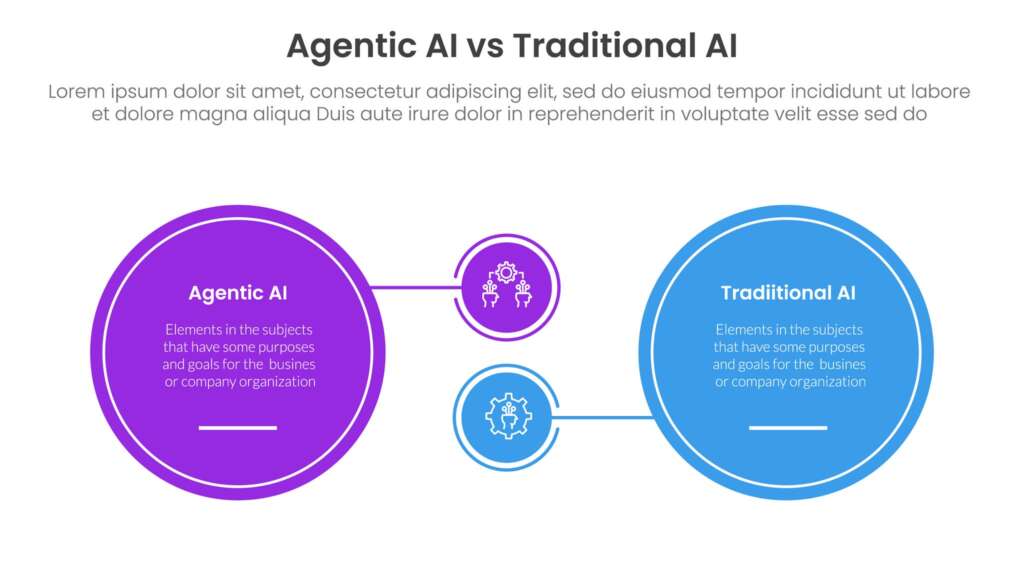
To understand why Agentic AI is creating such a massive buzz in enterprise technology, it helps to compare it directly with standard Generative AI.
Think of it this way: if Generative AI is like hiring a talented freelancer who writes text only when given strict instructions, Agentic AI is like bringing on a project manager who takes a goal, creates a complete workflow, coordinates tools, and brings back finished results.
Here is a side-by-side breakdown showing how the two technologies compare:
| Feature | Standard Generative AI (e.g., ChatGPT) | Agentic AI (e.g., AutoGPT, CrewAI, Devin) |
| Primary Function | Content generation & single-turn responses | Goal achievement & workflow execution |
| User Interaction | Prompt → Response | Goal Input → Multi-step Autonomous Execution |
| Reasoning | Immediate (One-shot response) | Iterative (Planning, reflection, self-correction) |
| Tool Integration | Limited or manual | Native (APIs, databases, web browsing, Python scripts) |
| Autonomy Level | Low (Requires human in the loop for every step) | High (Operates independently to reach the goal) |
| Memory | Session-based memory | Short-term & long-term vector database memory |
What Makes Agentic AI Stand Out?
When you look at the comparison table, three major capabilities set Agentic AI apart:
- Self-Correction & Iteration: Standard AI gives you a direct response and stops. If it makes a mistake, you have to prompt it again. Agentic AI runs reflection loops—it evaluates its own work, catches errors mid-process, and adjusts its plan automatically before delivering the final result.
- Native Tool Access: Generative tools stay inside their chat window. In contrast, Agentic AI can call external tools directly. It can run a Python script to analyze raw data, search live databases, or send an API request to a software platform.
- Long-Term Memory: Instead of forgetting context once your chat session resets, an agentic system relies on vector databases. This allows Agentic AI to recall past project details, organizational guidelines, and historical data across multiple tasks.
How Do AI Agents Work? The Core Architecture
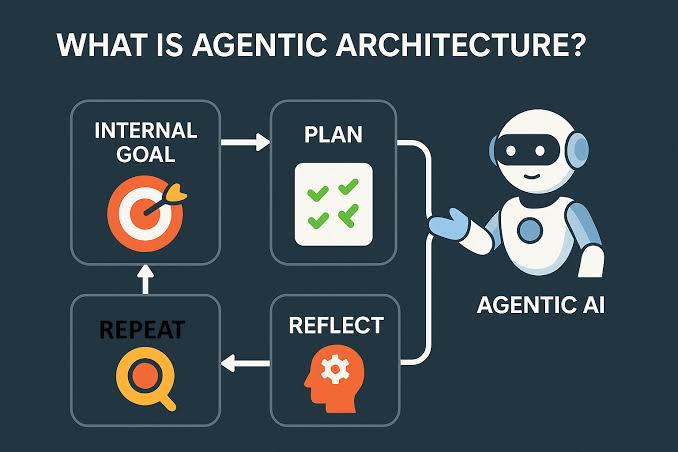
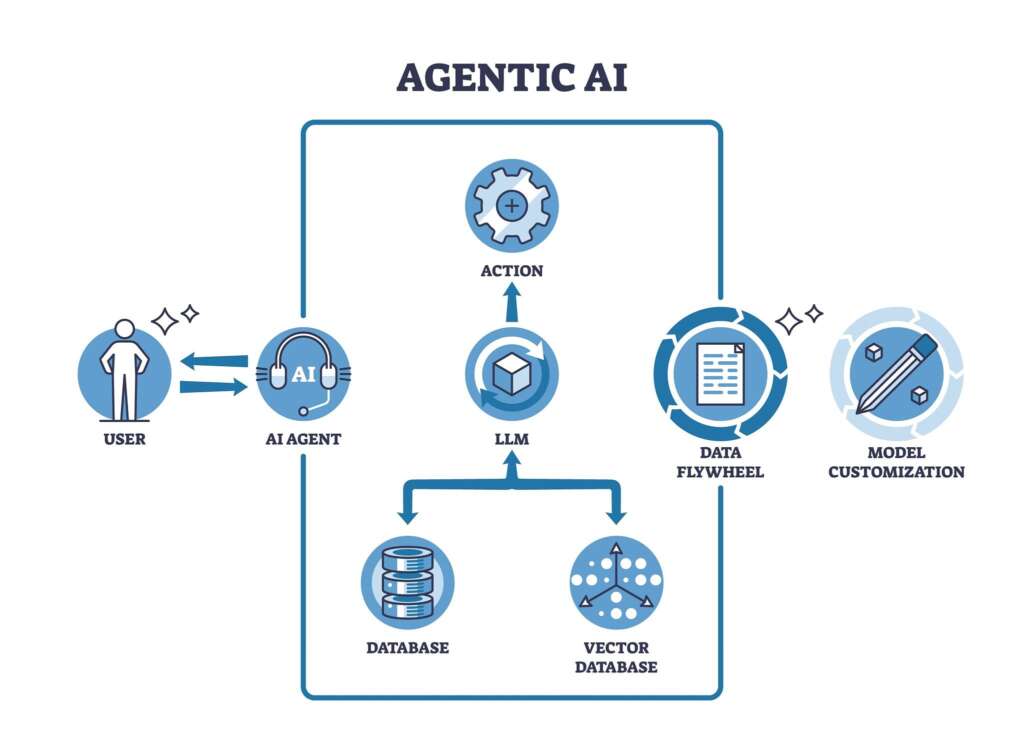
At the heart of any Agentic AI system is a continuous reasoning cycle often called the Perceive–Plan–Act–Reflect loop. Rather than just generating text in a straight line, an AI agent functions like a coordinated digital brain powered by four primary components:
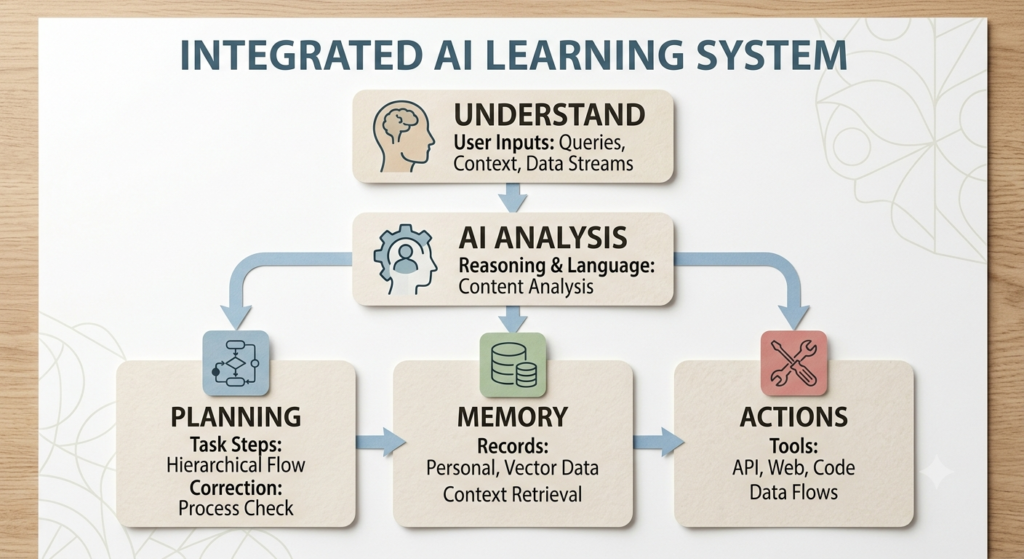
Here is how these four core pillars work together to make Agentic AI truly autonomous:
1. The Core LLM (The Brain)
Think of the Large Language Model (like GPT-4o, Claude 3.5 Sonnet, or Llama 3) as the central reasoning engine. It acts as the agent’s brain—interpreting your high-level objective, understanding context, and deciding what steps need to happen next.
2. Planning and Task Decomposition
When you hand Agentic AI a broad goal (for example, “Perform competitor research and draft a quarterly strategy report”), it doesn’t panic. It relies on two smart planning mechanisms:
- Task Decomposition: It splits your macro goal into a logical sequence of smaller, manageable sub-tasks.
- Refinement & Re-planning: It constantly evaluates intermediate results. If a tool fails or returns bad data, the agent dynamically adjusts its plan on the fly.
3. Smart Memory Systems
To keep track of long projects without getting digital amnesia, Agentic AI relies on two types of memory:
- Short-Term Memory: Retains immediate, active context during the task session (like keeping track of the current step in a workflow).
- Long-Term Memory: Uses external vector databases (such as Pinecone, Weaviate, or ChromaDB) to store, search, and recall past interactions, company documents, and historical data over time.
4. Tool Integration & Action Execution
An AI brain is only as good as its ability to affect the real world. Through tool execution, Agentic AI connects directly to external systems via APIs, web browsers, SQL databases, and code interpreters. This allows the agent to actively fetch live data, run Python scripts, or execute software tasks without needing a human operator to do it manually.
Top Real-World Use Cases of Agentic AI
It isn’t just a buzzword locked in research labs—Agentic AI is already moving straight into enterprise production. Market analysts at Gartner predict that task-specific AI agents will power over 40% of enterprise applications, completely automating end-to-end workflows across major industries.
Here is how Agentic AI is actively transforming business sectors today:
1. Software Engineering & Development
Autonomous coding agents (like Cognition’s Devin or open-source platforms like OpenHands, formerly OpenDevin) go far beyond basic code completion. Instead of writing tiny code snippets, you can assign an agent a GitHub issue ticket, and it will:
- Clone the repo: Set up the project and reproduce the bug locally in a sandboxed environment.
- Locate errors: Search through thousands of lines of code to identify faulty functions.
- Fix & debug: Write unit tests, modify the code base, and debug errors automatically.
- Submit PRs: Open a clean Pull Request (PR) ready for human developer review.
2. Autonomous Customer Support
Traditional chatbots rely on rigid scripts and decision trees that usually end up frustrating customers. Agentic AI turns customer service into an active resolution engine by integrating directly with company databases:
- Verify identity: Authenticate customer records inside a CRM platform.
- Check real-time status: Fetch shipping updates directly via logistics APIs.
- Execute actions: Process refunds, modify subscription tiers, or update delivery addresses autonomously.
- Escalate smartly: Hand off complex cases to human support teams only when strict safety thresholds are breached.
3. Finance & Investment Research
In financial services, financial analysts use collaborative multi-agent systems where specialized agents work together like a full research team:
- Agent 1 (Researcher): Scrapes live stock market data, SEC filings, and global news feeds.
- Agent 2 (Quantitative Analyst): Feeds raw numbers into valuation models to calculate real-time financial ratios.
- Agent 3 (Writer & Designer): Synthesizes the analysis, creates visual charts, and compiles a comprehensive executive summary report.
4. Supply Chain and Logistics
Global supply chains are notoriously complex, with disconnects between ERPs, inventory systems, and shipping portals creating costly delays. Agentic AI connects these fragmented systems into a synchronized, autonomous network that senses, decides, and acts in real time:
- Real-time monitoring: Continuously tracks inventory stock levels across global warehouses and distribution centers.
- Predictive disruption management: Analyzes weather patterns, port congestion, and carrier freight rates to detect potential delays before they happen.
- Autonomous procurement: Evaluates alternative backup suppliers against budget and lead-time constraints, automatically issuing purchase orders to keep production moving smoothly without manual intervention.
Will Agentic AI Replace Jobs?
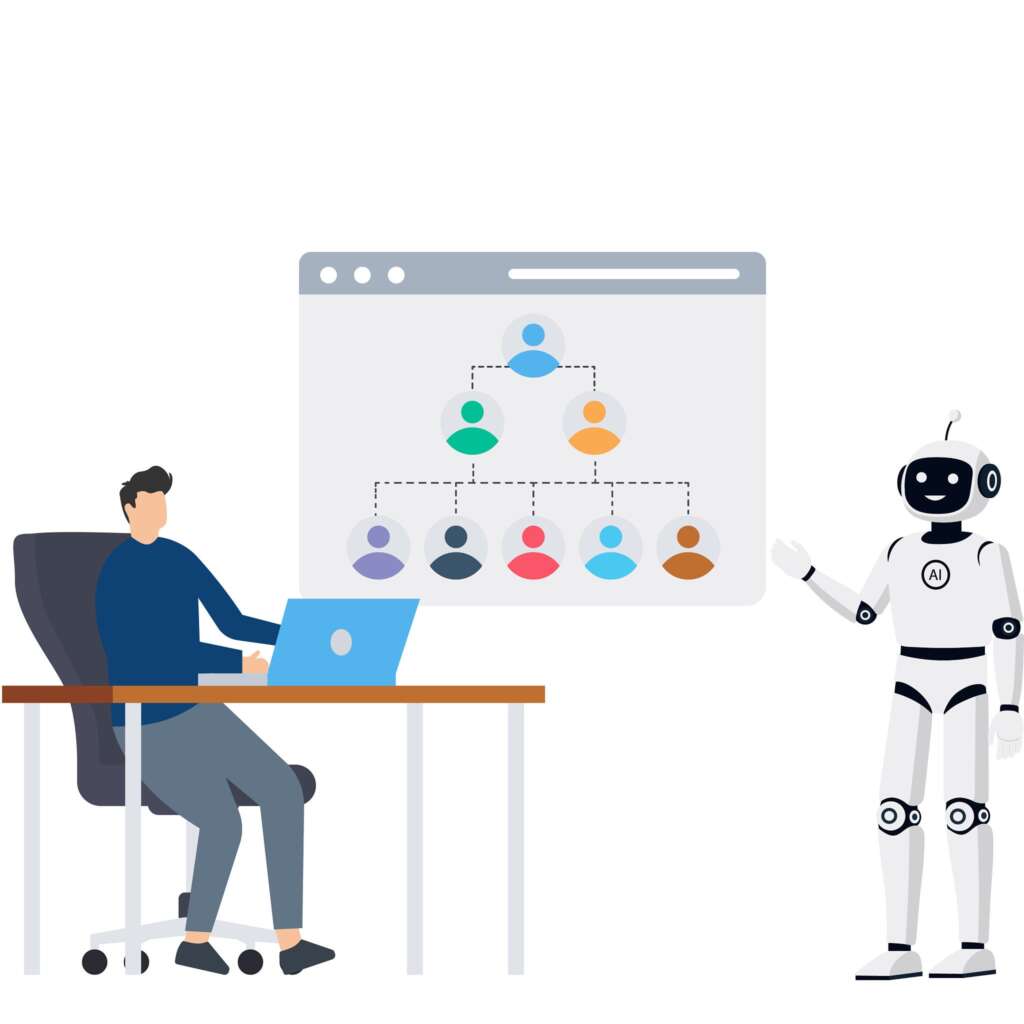
Now for the big question on everyone’s mind—from working professionals to business leaders: Will Agentic AI make human jobs obsolete?
I completely understand why you might ask that! Watching an autonomous AI agent fix broken code, manage real-time inventory, or clear customer refunds all on its own can feel a little scary. But the short answer has a lot of sides: while Agentic AI will definitely shift how everyday roles look, it is far more likely to help humans do better work and upgrade job roles rather than cause widespread unemployment.
Think of Agentic AI not as a replacement for people, but as the ultimate digital coworker. It takes care of the dull, repeated tasks so you can focus on real problem-solving, creative ideas, and big decisions.
“AI won’t replace humans, but humans using AI will replace humans who don’t.”
— Harvard Business Review & Tech Consensus
Jobs Most Impacted by Agentic AI
Roles that consist mainly of clear, repetitive, admin, or step-by-step tasks will see the fastest shift toward automation:
- Data Entry & Basic Operations: Copying, pasting, and moving data by hand between software tools will be completely taken over by background API agents.
- Level-1 Customer Service: Answering basic questions, looking up shipping updates, and handling simple return tickets will happen instantly through AI support agents 24/7.
- Junior Quality Assurance & Testing: Running simple test scripts, checking app performance, and finding basic bugs will move directly to software engineering agents.
Why Humans Remaining Essential (The Human-in-the-Loop Advantage)
Even with all this speed and intelligence, Agentic AI is not infallible. It comes with clear limits that make human oversight non-negotiable:
- Ethics and Strategic Judgment: AI agents do not possess moral values, empathy, or true business vision. High-stakes choices—such as medical diagnoses, legal judgments, or company strategy—always require human accountability.
- Hallucinations and Feedback Loops: An agent can occasionally make bad assumptions, process incorrect data, or get stuck in repetitive trial-and-error loops. Having a human monitor its output prevents costly errors.
- Complex Creativity: True innovation, unique artistic voice, and genuine human connection cannot be created by an algorithm alone.
New Careers Created by the Agentic Era
Just as earlier tech revolutions opened up entirely new fields, Agentic AI is actively creating exciting job categories:
- AI Agent Architects: Developers who build, connect, and manage specialized multi-agent networks for enterprises.
- AI Safety & Ethics Auditors: Compliance specialists who make sure autonomous agents operate safely without bias, security flaws, or data leaks.
- Workflow & Prompt Engineers: Experts who define clear goals, business guardrails, and operational boundaries for business agents to follow.
In short, Agentic AI is here to handle heavy lifting, not replace human judgment. Learning to work alongside these systems is the single best way to stay ahead!
Advantages and Current Limitations of Agentic AI
Every major technological leap comes with its strengths and trade-offs, and Agentic AI is no exception. Understanding both sides helps organizations deploy autonomous agents safely and effectively.
Advantages of Agentic AI
- End-to-End Workflow Automation: Unlike standard chatbots that only answer questions, Agentic AI completes entire multi-step tasks across multiple applications without manual hand-offs.
- Proactive Problem Solving: Agents don’t just wait for prompts—they monitor systems, detect anomalies (like supply chain bottlenecks or server downtime), and take immediate corrective action.
- Dynamic Error Recovery: When a traditional script encounters an error, it crashes. An agentic system evaluates what went wrong, tries an alternative approach, and self-corrects on the fly.
- Massive Operational Scalability: Multi-agent networks can handle thousands of customer tickets, code reviews, or financial analyses simultaneously, drastically cutting down processing times.
Key Limitations and Risks
- Infinite Loops & High Compute Costs: Unconstrained agents can occasionally get stuck in repetitive trial-and-error loops, consuming unnecessary API tokens and compute resources if strict limits aren’t set.
- Cascading Errors: If an agent relies on faulty initial data or bad tool outputs, early mistakes can multiply as it executes subsequent steps in the workflow.
- Security & Permission Risks: Giving agents autonomous access to APIs, internal databases, and external tools creates potential vulnerabilities if strict permission boundaries and guardrails aren’t enforced.
- Lack of Emotional Intelligence: Agents excel at logic and execution, but they lack moral intuition, empathy, and qualitative business judgment required for sensitive human decisions.
Conclusion: Embracing the Agentic Future
Hey there, Cache here! Let’s wrap things up.
Agentic AI is a giant leap forward in how we work with technology. We are moving away from simple tools that just answer your questions, and stepping into a world with smart digital teammates that can take a big goal, figure out the steps, and finish the job on their own.
These autonomous helpers won’t make human workers disappear. Instead, they raise the bar for how much we can achieve—speeding up software coding, handling business tasks, and clearing out boring admin work.
The companies and teams that learn how to set up clear safety rules and work alongside Agentic AI today will be the ones leading the way tomorrow!
Frequently Asked Questions (FAQ)
Got a few more questions on your mind? Cache here to clear them up! Here are simple, straightforward answers to the most common questions about Agentic AI:
What is the main difference between Generative AI and Agentic AI?
Generative AI acts like a writer that creates text, images, or code based on your prompt. Agentic AI goes a step further—it acts like an operator that takes a big goal, makes a step-by-step plan, uses external software tools, and completes entire tasks on its own.
How does Agentic AI remember information over time?
AI agents use two types of memory:
Short-Term Memory: Remembers details during your current active session.
Long-Term Memory: Uses databases (called vector databases) to store and look up past project details, guidelines, and historical data across different tasks.
Can Agentic AI run completely on its own without humans?
While Agentic AI can handle complex steps automatically, keeping a human in the loop is essential. Humans set safety guardrails, approve high-stakes choices, and take over whenever an unusual problem arises.
What are the most popular frameworks used to build Agentic AI?
Developers use open-source frameworks like CrewAI, AutoGPT, LangGraph, and Microsoft AutoGen to build, train, and orchestrate smart AI agents.
Is Agentic AI safe for business and enterprise data?
Yes, as long as companies set strict permission boundaries! Enterprise Agentic AI systems use secure access controls, data encryption, and human review steps to protect sensitive information and prevent unintended actions.